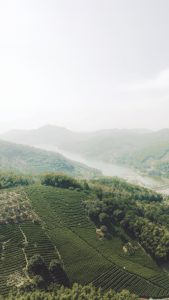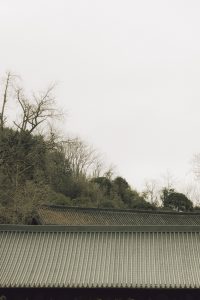
Jingshan Pagoda · Tea Landscape
Balzar has been selected by the Jingshan Municipality in Hangzhou to design one of the fifteen pagodas forming part of a new landscape route embedded within the historic tea fields of the region.
The initiative aims to position Jingshan as an international cultural destination, integrating contemporary architecture with an agricultural landscape of deep historical significance. Each of the fifteen pagodas has been commissioned to a different studio, bringing together local Chinese practices and international offices from Europe and Japan.

Our inclusion within this curated group represents an important acknowledgment. Not only because of the symbolic value of the project, but also due to the municipality’s decision to invite external perspectives capable of engaging meaningfully with a longstanding cultural tradition.
This week we travelled to Jingshan to visit the designated plots, experience the tea fields firsthand and gain insight into the local culture that underpins the project. The territory itself — its topography, agricultural scale and atmospheric qualities — forms the foundation of our approach.
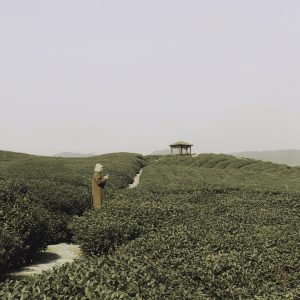
Balzar’s practice is increasingly positioned within cultural and territorial contexts where architecture assumes civic relevance and engages with collective memory. The studio is progressively involved in projects that move beyond the scale of private commission to operate within broader public and landscape frameworks. In this trajectory, architecture is approached not merely as construction, but as a rigorous response to place, history and shared use.